Tips
Sorting History has no timer and no penalty by default — you control the difficulty. Here is how to dial the game down when you want to wind down, or up when you want a real challenge. Mechanics, rules, and scoring math live on the How to Play pages; this page is strategy only.
Make it easier
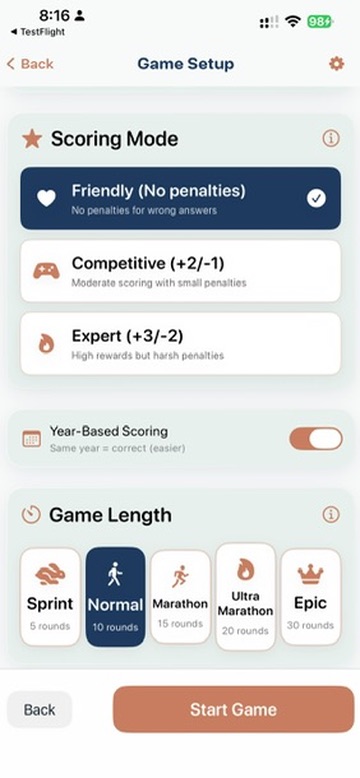
- Pick a Sprint (5 rounds). Quick game, low stakes. Save Marathon and Epic for when you have time to commit. See game length.
- Choose categories you know well. Lean into your strengths. Browse the categories and pick the ones that match what you read or watch.
- Switch to Friendly difficulty. Wrong placements cost zero points. You can only go up. See difficulty modes.
- Leave Year-Based Scoring on (default). Two events from the same year are interchangeable — you don't have to know the exact month order. See Year-Based Scoring.
- Stay in the core Sorting History mode. Placing events in relative order is easier than guessing exact years. History Pinpoint is the harder cousin.
- Pick a single category at a time. A focused category gives you a more predictable timeline than mixing five different ones.
Make it harder
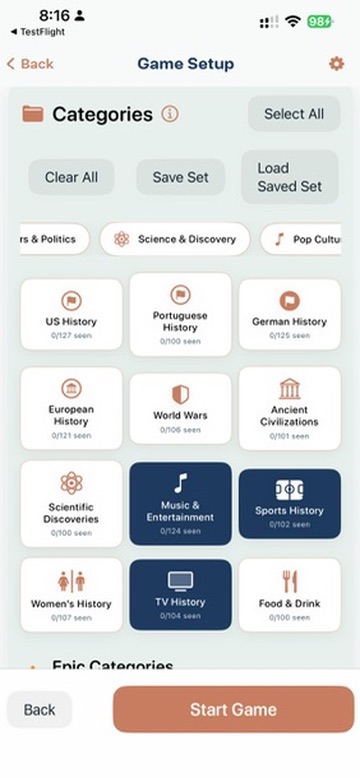
- Pick categories you don't know well. Portuguese History, Dutch History, Space Exploration — the ones you skipped first time. The Categories page lists them all.
- Play longer games. Marathon (15), Ultra Marathon (20), or Epic (30). The further you go, the more crowded the timeline gets and the harder each new placement becomes.
- Switch to Competitive or Expert. Competitive penalizes wrong placements by −1; Expert penalizes by −2 and rewards correct placements with +3. See difficulty modes.
- Turn Year-Based Scoring off. Same-year events now require exact month order, with no month shown on the cards. See Year-Based Scoring.
- Try History Pinpoint. A different and much harder skill — History Pinpoint asks you to name the specific year an event happened. That is specific knowledge, not just relative knowledge of what came before what. Historian tier.
- Mix several categories in one game. Pick five categories at once for a Sprint. Each round is a surprise from any of them.
Get better at Sorting History
- Use Learning Mode in solo. The game brings back what you got wrong until you get it right. Pair it with Friendly difficulty so missed answers don't sting. See how to play solo.
- Play the Daily Challenge every day. Under two minutes for five events in a surprise category. It exposes you to topics you wouldn't otherwise pick and builds a daily habit. See how the Daily Challenge works.
- Commit fast on your guesses. Long deliberation often replaces a correct gut feel with a worse "logical" answer. Your first instinct is usually closer than you think.
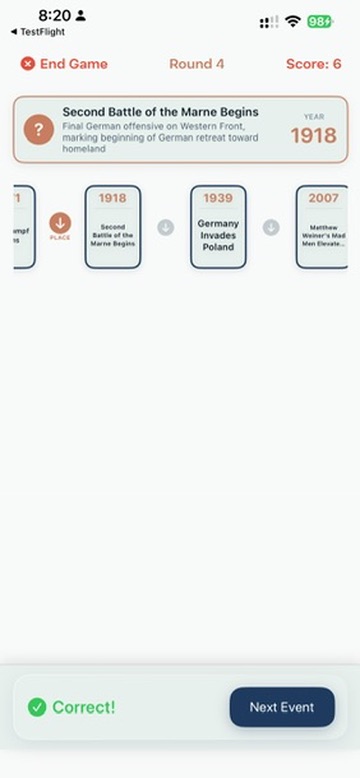
- Read the context after every round. Even when you place an event correctly, the year and description teach you something for the next placement. The learning is in the explanation, not the placement.
For tips and mechanics on History Pinpoint, see the History Pinpoint guide — that's where the year-guessing strategy lives.
Climbing the Mastery Paths

Two paths track your progress. Historian Path is per-category depth — how well you know one topic. Scholar Path is broad breadth across all live categories. They reward different play styles.
- Push Historian Path on the categories you love. Pick one topic and play it repeatedly. Each rank takes more correct events but the recognition gets deep fast.
- Push Scholar Path by spreading wide. Play every live category. Free players cap at the Sage rank; Explorer and Historian can climb higher.
- Push your weakest categories on the Mastery dashboard. The dashboard tells you which category is dragging your Scholar rank down. That's the one to play next — the fastest way to lift your overall Scholar Path rank.
A dedicated Mastery Paths guide is coming — until then, the How to Play hub covers how the ranks work in each mode page.
More Guides
- How to Play Sorting History — the core mode
- How to Play History Pinpoint — year-guessing mode
- How to Play the Daily Challenge — 5 events a day, same for everyone
- Scoring & Difficulty — difficulty modes and points explained
- All How to Play guides